Showing posts with label Swine flu. Show all posts

Tuesday, March 24, 2015

Swine Flu H1N1 - Different types of mask that may Protect You from swine flu H1N1 virus.

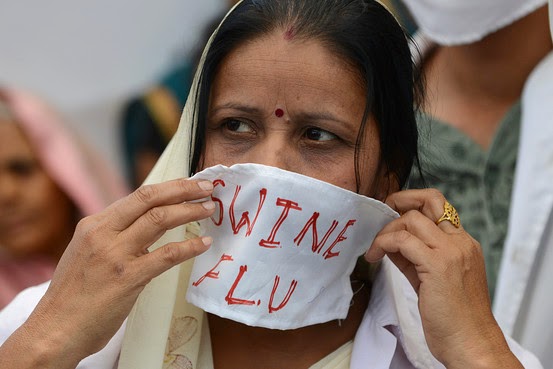
There has been a rising demand for various types of preventive masks in India, following resurgence of swine flu cases.

The cheap anti-pollution cloth masks (priced at roughly Rs 10) are getting sold quickly in spite of not guaranteeing prevention from swine flu H1N1.The N-95 masks (were popular during the Sars scare) promise 95% filtering efficiency, are in demand but not easily available.

The N-95 disposable mask, comes in five different models. It costs Rs 55 to Rs 270. It is suppose to help reduce exposure to particles more than 0.3 microns in size. The N95 respirator has more than 95% filtering efficiency. It has been tested and recommended by the World Health Organisation (WHO) for pandemics.
Swine flu - prevention, Different types of mask that may Protect You from swine flu

THE SURGICAL MASK

This mask prevents droplets and viruses that are more than 4 microns in diameter, like the influenza virus which causes the common cold, from passing through. Best used outdoors and on public transport. Made of paper with a gelatinous layer.
Advantages
Comfortable, provides ventilation. Can fit everybody as the straps can be adjusted to fit each head size. Even children can wear it.
Disadvantages
Should be changed every four hours, or once it becomes wet with fluid. Difficult for people wearing secs as vapour will keep forming on their lenses.

THE PAPER MASK
This mask will not give much protection against swine flu or H1N1 viruses. They do not have a filter. Unlike the three-ply surgical mask. Anything with a diameter less than 5 microns will be able to pass through the paper and into the respiratory system.
Advantages
Ok for minimal use. People serving food can use it for hygiene. Not useful for those who have a cough or cold.
Disadvantages
Hardly any protection against viruses. Can tear easily because of moisture from saliva.


THE N-95 MASK

Very effective in catching very small particles as the material used to make this mask generates static electricity. Particles above 0.3 micron cannot pass through. Used to protect against highly transmissible respiratory infections such as tb.
Advantages
Made using a nonwoven technology of polypropylene fiber, that increases the density and filtering function.
Disadvantages
Breathing difficulties. Children may not be able to cover up the nose and mouth completely.

Monday, March 9, 2015

Can monitoring Wikipedia hits show how many people have the flu?

Researchers at Boston Children's Hospital, USA, have developed a method of estimating levels of influenza-like illness in the American population by analysing Internet traffic on specific flu-related Wikipedia articles.

David McIver and John Brownstein's model, publishing in PLOS Computational Biology, estimates flu levels in the American population up to two weeks sooner than data from the Centers for Disease Control and Prevention becomes available, and accurately estimates the week of peak influenza activity 17% more often than Google Flu Trends data.
McIver and Brownstein calculated the number of times certain Wikipedia articles were accessed every day from December 2007 to August 2013. The model they developed performed well both through influenza seasons that are more severe than normal and through events such as the H1N1 pandemic in 2009 that received high levels of media attention.

The authors comment:
"Each influenza season provides new challenges and uncertainties to both the public as well as the public health community. We're hoping that with this new method of influenza monitoring, we can harness publicly available data to help people get accurate, near-realtime information about the level of disease burden in the population."
Following further validation, the model could be used as an automatic system to model flu levels in the USA, providing support for traditional influenza surveillance tools.

Sunday, March 8, 2015

India Swine Flu 2015: Death Toll Tops 1,000 In More Than 20,000 Cases!!!!

India’s Health Ministry said Monday 1,115 of the 20,795 people infected with swine flu in 2015 have died. Officials said the virus usually increases during a monsoon, but they could not say whether the recent heavy rainfall in Delhi and other parts of the country's north would have any impact on the current H1N1 virus pandemic, the Times of India reported. They have, however, said they were not expecting a decrease in the incidence of the virus due to the rain.

The state of Gujarat has the highest death toll, with 275 dead from the disease, the Times of India said. That is followed by Rajasthan with 267 deaths and Madhya Pradesh with 160 deaths. Rajasthan has the highest number of confirmed cases, with 5,610, followed by Gujarat with 4,614 cases and Delhi with 2,999 cases.
Maharashtra state Chief Minister Devendra Fadnavis announced his state will treat all swine flu patients free of charge, the Times of India reported. "I have issued instructions to the public health department to ensure completely free treatment of H1N1 patients in private hospitals across the state,” he told the newspaper. “They cannot refuse swine flu treatment to anyone and the government will bear the entire cost of such treatment." Of the 1,789 cases reported in Maharashtra, 152 resulted in death.
Rajasthan Health Minister Rajendra Singh Rathore announced during a state assembly all government hospitals would provide free face masks to patients who test positive for the H1N1 virus, India news site NDTV reported. He also shot down questions suggesting there had been negligence by medical staff at government hospitals. Rajasthan declared a swine flu epidemic earlier in February.
India experienced a similar H1N1 pandemic in 2009 and the pandemic this year has been India’s worst resurgence since. More than 2,700 died from May 2009 to December 2010, Reuters reported.

The severest flu cases are in young, unvaccinated adults!!!! ( Its time to get vaccinated)

A snapshot of patients who required care at Duke University Hospital during this year's flu season shows that those who had not been vaccinated had severe cases and needed the most intensive treatment.
In an analysis of the first 55 patients treated for flu at the academic medical center from November 2013 through Jan. 8, 2014, Duke Medicine researchers found that only two of the 22 patients who required intensive care had been vaccinated prior to getting sick.
The findings were published online in the American Journal of Respiratory and Critical Care Medicine.
"Our observations are important because they reinforce a growing body of evidence that the influenza vaccine provides protection from severe illness requiring hospitalizations," said lead author Cameron Wolfe, M.D., assistant professor of medicine at Duke. "The public health implications are important, because not only could a potentially deadly infection be avoided with a $30 shot, but costly hospitalizations could also be reduced."
Wolfe said this year's flu season was marked by hospitalizations of previously healthy young people, with a median age of 28.5 years. Among those who were hospitalized at Duke, 48 of the 55 were infected with the H1N1 virus that caused the 2009 pandemic. That outbreak also hit young adults particularly hard.
"We observed a high percentage of hospitalized patients for influenza requiring ICU level care, which appears higher than observed in our hospital during the 2009 pandemic flu season," said co-author John W. Hollingsworth, M.D., associate professor of medicine at Duke. "It remains unclear whether the high rate of ICU admissions represents a diagnosis bias or whether the severity of illness being caused by the current H1N1 virus is higher."
Of the 33 patients admitted to regular wards rather than the ICU at Duke University Hospital, only eleven had been vaccinated; most of those were immune compromised, chronically ill, or were on a medication that weakened the vaccine's protection.
The study also echoes other studies that have highlighted problems with a rapid test for influenza.
Wolfe said 22 of the patients treated at Duke University Hospital had been given a rapid influenza test that came up negative for flu, but they were actually positive when tested by other methods. As a result, they had not received anti-viral medications that might have eased flu symptoms had they been taken early.
"Together, our observations during this influenza season support a high prevalence of the H1N1 virus affecting young adults and requiring ICU care, high false negative rates of rapid flu tests, and delay in starting antiviral treatment," Wolfe said. "Added to the finding of very low vaccination rates among both hospitalized and ICU admissions, our observations support previous findings that vaccination reduces the severity of disease and vaccinations should be encouraged as recommended by the U.S. Centers for Disease Control and Prevention."

Friday, March 6, 2015

find out where The drug for swine flu "oseltamivir" is available near you....

According to a recent Health Ministry report, till February 24 this year, the total number of deaths due to Swine Flu has reached 926 while the number of affected persons across the country stood at 16,235.
The anti-viral medicine oseltamivir that is useful in treating swine flu is available free in all designated hospitals and also at private pharmacies for about Rs 2000 for a strip of 10 tablets. However, one would need a prescription signed and stamped by a government doctor to get free medicines.
Meanwhile, the Central Drugs Standard Control Organization has released a complete list of all the names and addresses of sale premises holding schedule x license for sale of “oseltamivir” formulations.
Drugs Controller General, Dr.G.N.Singh, released the list in the offcial website of the drug control organisation. Here is an excerpt from the press release.
"In view of the current situation of spreading of Swine flu in the country, CDSCO is continuously engaged in monitoring the availability of drugs, vaccine and diagnostic kits used for the control of Swine Flu. All State Drugs Controllers have been requested to take necessary measures to ensure that the drugs, vaccine and diagnostics kits of standard quality are available particularly in the affected States. The concerned manufacturers / importers have also been sensitized to take all necessary measures to ensure the availability of the drugs, vaccine and diagnostic kits in the country.

Any dealer who has the license to sell, stock or distribute the drugs specified under the Schedule X to the Drugs and Cosmetic Rules, is authorized to sell the formulation of Oseltamavir Phosphate used for the treatment and prevention of Swine Flu. A list of such license holders in various parts of the country, as collected from the States in December, 2009 by the CDSCO is attached herewith for information of all concerned. Further all the State / UT Drugs Controllers have been requested to provide updated list of Schedule X licensees urgently for uploading on CDSCO website."
Here are the names and addresses of sale premises holding schedule x license for sale of “oseltamivir” formulations. Choose your state and once you are inside the PDF, search for your city/province to get the address and phone number of the pharmas. Or scroll down the list to find out a store near your location.

follow the link and click on your state and download the pdf list

Thursday, March 5, 2015

Outbreak of swine flu in India is no worse than seasonal flu, say specialists- British Medical Journal News.

The outbreak of H1N1 influenza in India this year, which has killed 875 people since 1 January, is not yet a major concern because the incidence and mortality are no different from those caused by seasonal flu in developed countriessuch asthe United States, infectious disease specialists have told The BMJ.

                However, they said the Indian government should now recommend vaccination for at-risk groups including elderly people, patients with chronic diseases, pregnant women, and young children.          
                India does not currently recommend yearly influenza vaccinationsfor the general public because the burden of H1N1 is so small when compared with diseases such as tuberculosis, which affected 2.1 million people in 2013.1 Such a vaccination becomes ineffective after a year and takes 3-4 weeks to confer immunity—making its large scale use impractical, said Jagat Prakash Nadda, India’s health minister, in written responses to questions raised in the upper and lower houses of the Indian parliament this week. However,since the H1N1 outbreak began last year the health ministry has recommended a vaccine for public health workers who come into contact with infectious patients.

                   The H1N1 epidemic has affected 15 413 people since the start of 2015, compared with 27 236 in 2009 and 20 604 in 2010. The death tolls in 2009 and 2010 were 981 and 1763, respectively. This year the most affected state has been Rajasthan, with 4734 confirmed cases, followed by Gujarat, with 3337 cases.
             Rising mortality has led to panic among the public and an increased demand for diagnostic tests and treatment, even among people with no flu symptoms. This has put extra pressure on the limited infrastructure available for swine flu testing in India. Currently, only 46 government laboratories across the country can test for swine flu, in addition to accredited private labs. And demand for more tests has led to overcharging by private labs, some of which have charged Rs 3000 to Rs 9000 (£31 to £94; €43 to €128; $49 to $146) for a test.

             The Indian government’s response has been to ask the drug controller to ensure the availability of the antiviral drug oseltamivir (Tamiflu) in all stores that have a licence to stock it, as well as regulating prices of swine flu diagnostic tests, which have risen since the outbreak began. The worst affected states,such as Gujarat, have taken stronger measures: yesterday the Gujarat government banned public gatherings from taking place without permission, in an attempt to stem the spread of the disease.
                   The strain of H1N1 circulating this year is the same as that in 2009, the health ministry said. George M Varghese, professor of medicine and infectious diseases at the Christian Medical College in Vellore, Tamil Nadu, said that the resurgence of the disease could be because people who acquired immunity in the 2009 epidemic have now lost the antibodies, making this a natural spike in the disease cycle. Nevertheless, the epidemic is expected to die down in a month or two as temperatures rise and conditions become unfavourable for the virus to transmit itself, doctors told The BMJ.
                      While the mortality rate of 5.6% (875 of 15 413 cases) seems high and has raised concern among the general public, it does not indicate the virulence of the disease, said the doctors: the actual number of affected people is likely to be far higher than 15 413 because only severe cases and deaths are reported. The mortality rate from H1N1 istherefore probably lower than 0.5% and closer to the mortality from seasonal flu in developed countries such as the US.

                H1N1 tends to cause complications only in people with pre-existing conditions. Dilip Mathai, dean of the Apollo Institute of Medical Sciences and Research in Hyderabad, said that vulnerable groups of people, such as pregnant women, elderly people, and public healthcare workers, should therefore use facial masks and be vaccinated.
             Most doctors The BMJ spoke to said that the government’s response to the current epidemic was adequate, but a few experts argued that India is lagging behind in epidemiological and genomic research into H1N1 outbreaks, which is critical in anticipating future epidemics and vaccines’ effectiveness.
                Thekkekara Jacob John, clinical virologist and formerly a professor at the Christian Medical College, said that India was not tracking the prevailing strains of flu or the climatic and social conditions that can trigger an outbreak. The lack of a public health ministry in India, he said, means that India is missing out on valuable early stage data during an epidemic, which can curtail its spread.

                    He said, “A public health department would have kept track of which virus is beginning to show up as seasonal flu. If it was H1N1, an immediate response should have been instituted a few months ago.” Another gap in India’s response has been the lack of data on the swine flu viral genome. India has contributed surprisingly little to global databases on the influenza genome even though it sees frequent large outbreaks, said Ram Sasisekharan, professor of biological engineering at the MassachusettsInstitute of Technology, USA. This means that India may be unaware of mutations happening in different regions of the country, he said, which may render vaccines ineffective against the disease.


Wednesday, March 4, 2015

Flu infections can lead to deadly cytokine storm that sparks lung inflammation

Scientists at The Scripps Research Institute (TSRI) have mapped key elements of a severe immune overreaction - a "cytokine storm" - that can both sicken and kill patients who are infected with certain strains of flu virus.
Their findings, published in the online Early Edition of the Proceedings of the National Academy of Sciences, also clarify the workings of a potent new class of anti-inflammatory compounds that prevent this immune overreaction in animal models.
"We show that with this type of drug, we can quiet the storm enough to interfere with the virus-induced disease and lung injury, while still allowing the infected host to mount a sufficient immune response to eliminate the virus," said John R. Teijaro, an assistant professor in TSRI's Department of Immunology and Microbial Science and first author of the study.
"This study provides insights into mechanisms that are chemically tractable and can modulate these cytokine storms," said Hugh Rosen, professor in TSRI's Department of Chemical Physiology and senior author of the study with Michael B. A. Oldstone, professor in TSRI's Department of Immunology and Microbial Science.

Calming the Storm
A cytokine storm is an overproduction of immune cells and their activating compounds (cytokines), which, in a flu infection, is often associated with a surge of activated immune cells into the lungs. The resulting lung inflammationand fluid buildup can lead to respiratory distress and can be contaminated by a secondary bacterial pneumonia - often enhancing the mortality in patients.
This little-understood phenomenon is thought to occur in at least several types of infections and autoimmune conditions, but it appears to be particularly relevant in outbreaks of new flu variants. Cytokine storm is now seen as a likely major cause of mortality in the 1918-20 "Spanish flu" - which killed more than 50 million people worldwide - and the H1N1 "swine flu" and H5N1 "bird flu" of recent years. In these epidemics, the patients most likely to die were relatively young adults with apparently strong immune reactions to the infection - whereas ordinary seasonal flu epidemics disproportionately affect the very young and the elderly.

For the past eight years, Rosen's and Oldstone's laboratories have collaborated in analyzing the cytokine storm and finding treatments for it. In 2011, led by Teijaro, who was then a research associate in the Oldstone Lab, the TSRI team identified endothelial cells lining blood vessels in the lungs as the central orchestrators of the cytokine storm and immune cell infiltration during H1N1 flu infection.
In a separate study, the TSRI researchers found that they could quiet this harmful reaction in flu-infected mice and ferrets by using a candidate drug compound to activate immune-damping receptors (S1P1 receptors) on the same endothelial cells. This prevented most of the usual mortality from H1N1 infection - and did so much more effectively than the existing antiviral drug oseltamivir, although the combination of both therapies worked even better. "That was really the first demonstration that inhibiting the cytokine storm is protective," said Teijaro.
Mapping a Path Forward
For the new study, Teijaro and his colleagues set out to map the major elements of the cytokine storm in H1N1 infection. To do so, they used gene knock-out techniques to breed mice that lack one or more molecular sensors ofinfluenza virus infection and then observed the response to infection by H1N1 influenza virus.
The experiments showed that knocking out any one infection-sensing pathway has relatively modest effects on damping the cytokine and immune cell lung-infiltration response. In each case, an experimental drug compound (CYM5442) that activates S1P1 receptors knocked it down much more.
"What this shows is that our drug is working not through one selective pathway but much more broadly," said Teijaro. "Many different cytokines are induced in this reaction, so just blocking one is surely not enough to reduce the lung disease."
While CYM5442's effect is broad, its action is selective on cells that bear the sphingosine-1-phosphate 1 receptor (S1P1R). Teijaro pointed out that it is also milder than those of steroids, which act indiscriminately on all lymphoid cells, and other strong immunosuppressant drugs, which may block the immune response so completely that an infecting virus ends up replicating out of control.
An optimized version of CYM5442, initially developed by Rosen and fellow TSRI chemist Ed Roberts, has been licensed to the pharmaceutical company Receptos. It is now in Phase 3 clinical trials for treating relapsing-remitting multiple sclerosis and Phase 2 trials for ulcerative colitis. Other S1P1 receptor agonists are in development for inflammatory conditions. A less-specific S1P receptor agonist - which hits S1P1, but also hits S1P3, S1P4 and S1P5, with potential off-target effects - is already approved for treating multiple sclerosis.
"We'd like to understand all the pathways through which S1P1 agonists work and, by pinpointing specific stop/start points, figure out how best to target those pathways with future drugs," said Teijaro, who plans further studies with his colleagues to determine what other cell types are involved in orchestrating and possibly quieting the cytokine storm. "I'm hoping our work can further contribute to TSRI's long track record of success in employing small molecule probes coupled to genetic and biochemical tools to provide biological insight into pathological disease processes."

Monday, March 2, 2015

Brain protein found to aid influenza recovery

Washington State University Spokane scientists have found a brain protein that boosts the healing power of sleep and speeds an animal's recovery from the flu.
Research by WSU Regents Professor James M. Krueger has determined that a brain-specific protein is uniquely involved in sleep responses triggered by the influenza virus in mice. Without the protein, animals develop more severe symptoms of infection and die at higher rates than regular or control mice.
Krueger said the discovery could lead to alternative treatments for influenza and other infectious diseases, possibly by using intranasal sprays to stimulate the production of the brain protein, called AcPb.
Previous research indicates that sleep is necessary for a healthy immune system and plays a critical role in the body's response to bacterial and viral infections.
Krueger showed this recovery involves AcPb and an immune system signaling chemical called interleukin-1. AcPb links up with interleukin-1 to help regulate sleep in healthy animals. It also prompts infected animals to spend more time sleeping during an illness.
In the study, mice who lacked the gene for AcPb slept less after being infected with influenza virus. They also became chilled, grew sluggish, lost their normal circadian rhythms and ultimately died in higher numbers than the mice who slept longer.
Krueger's findings were reported recently in the journal Brain, Behavior, and Immunity.
H1N1 Influenza
For the study, Krueger and his colleagues gave an intranasal dose of mouse-adapted H1N1 influenza virus to both regular mice and those lacking the gene for AcPb. H1N1 is the strain of influenza that swept across the world in the 2009 pandemic.
When infected, regular mice showed the typical prolonged sleep response, but mice lacking AcPb slept less than control mice. They also developed more severe symptoms of illness and died at a higher rate.
A neurological perspective
"Influenza is a lung disease," said Krueger, "and deaths probably occur from fluid building up in the lungs. But now, we see that without AcPb in the brain, the virus is even more deadly. Why would the brain be regulating a lung disease?"
"We knew that the virus replicated in the lungs," he said, "but we've discovered it also reaches parts of the brain - causing an inflammatory reaction involving interleukin-1 and AcPb. That reaction induces the increased sleep response that helps the body overcome an infection."
Interleukin-1 is also one of the inflammatory molecules responsible for the freezing, aching, feverish misery of the flu.
"This finding expands our knowledge of the molecular pathway involved in recovery from influenza," said Krueger, who hopes virologists will take note.
New flu treatments possible
Speculating on possible new treatments for the flu, Krueger explained that the interleukin-1 - AcPb signaling complex is linked to a different molecule in the immune system called growth hormone releasing hormone (GHRH) and its receptor (GHRHR.)
He said GHRHR was "previously shown to be critical to the healing sleep responses induced by the influenza virus, so this may offer another potential clinical approach to treat influenza and other microbial diseases."
Krueger said that while GHRH has not yet been used for treating infectious disease, other scientists are experimenting with it as a possible aid for memory and sleep.
A 2012 study by Laura Baker, a memory researcher at the University of Washington & VA Puget Sound Health Care System in Seattle showed that daily injections of GHRH boosted the mental agility of older people with and without mild cognitive decline.
And in 2009, German scientists developed an intranasal spray using interleukin-6 that was said to help the brain retain emotional and procedural memories during REM sleep.

Saturday, February 28, 2015

what is Bird Flu( Avian Influenza) and How does it differs from swine flu(H1N1)??


People are confused regarding avian influenza also called Bird Flu, they have mistaken this to the swine flu and in the pandemic of swine flu I encounter lots of questions both in my outpatient Department and also in quora where I answer a lot of questions regarding health.

Few questions I have encountered were
Does swine flu spread by chicken I am rearing at home
Does swine flu spread through chicken I eat
and many more

the answers for the questions is a big no!!!!

Today I am writing about the Avian influenza which is caused by a different virus which has familial relationship with the swine flu virus. Even though the clinical features of both the diseases are same, swine flu is not Bird Flu or vice-versa.I will be writing
what bird flu is ,
how does it spread and
its treatment
for details on swine flu please refer my earlier blogs

Here are the important facts on Bird Flu and I will elaborate it one by one later

1. Avian Influenza is caused by virus, it is an infectious disease of birds
2. Most of the Avian influenza do not cause disease in humans. few like influenza A H5N1 and influenza H7N9 have caused serious life threatening infections in people
3. Any outbreak of bird flu is cause for concern because of its effect on poultry farming, potential to spread to humans and to cause large outbreaks in humans ( Pandemic)
4.Majority of human cases are due to direct or indirect contact with infected live/dead poultry
5. Infection doesnot spread to people through properly cooked chicken meat and eggs

explanations to all the above facts

Avian Influenza is an infectious viral disease in birds especially the wild fowl(goose and ducks) and often do not cause any apparent signs of illness. These may spread to domestic poultry and cause large scale serious outbreaks. Occasionally they may cross species barrier and cause subclinical / serious infections in mammals and humans.

Avian influenzaA ( H5N1) is a highly pathogenic(disease causing) organism. It infected humans during an outbreak in Hong Kong SAR, China in 1997. It had reemerged in 2003 & 2004 and has spread from Asia to Africa and Europe causing serious outbreaks in poultry resulting in huge economic losses.
 H7N9 first infected 3 Humans in China in March 2013, no cases are reported outside China.
Ongoing circulation of H5N1 and H7N9 viruses in poultry where it is endemic cause serious threat for public health as they are like mine bombs with potential to cause serious disease in Humans.
They may change forms and spreads to humans more easily.

How do the present when infected?

Mortality (death rate) with H5N1 & H7N9 is much high compared to seasonal Flu

In patients , disease caused by H5N1 follows an aggressive course---- Rapid deterioration and death.
It takes about 2-8 days before patient develops symptoms( Incubation period) after infection and it can take upto 17 days.and for H7N9 it is 2-8 days

The symptoms are
High grade fever > 38*c
Cough
Sore throat
Diarrhea
Vomiting
Abdominal Pain
Chest Pain
bleeding from Nose and Gums
Most important thing seen with bird flu is involvement of lungs in early stages of disease causing respiratory distress( difficulty), Hoarse voice, bloody sputum

The disease can cause complications even if the patient survives early stages of disease like
Decreased blood oxygen levels ( hypoxemia)
Multi Organ Failure
Secondary Bacterial pneumonia and fungal pneumonia

Treatment
oseltamivir ( starflu) has to be started early in the course of disease i.e within 48 hours of symptoms to prevent the spread of virus from one cell to another.


AVIAN FLU or BIRD FLU is not SWINE FLU!!!!!! read my other blogs for information on swine flu..

I have tried to put everything in simple words , if there are an doubts please ask in the comments section

You can also suggest any topic which you want to know so that I will write it in my next blog.

Thursday, February 26, 2015

MYTHS and FACTS about swine flu!!!!

Being a chest physician I encounter a number of patients everyday. With swine flu cases on rise I come across so may questions by the patients.

Here are a few of them.
1. Does swine flu spread from PIGS
2. Does it spread with pork consumption
3. Can anyone contract flu through flu shots or vaccines
4.Does swine flu spread through eating chicken
5. Does it spread through blood transfusion.
6. Does it spread through mosquitos?
and a few questions asked to me in quora like
1. Does smoking protects against swine flu
2. How can I protect myself from swine flu,  in an epidemic

This stimulated me to write this article on MYTHS and FACTS of SWINE FLU


1.Does swine flu spread from PIGS

  Initially it has spread from pigs to humans.  The current H1N1 virus was a triple gene combination between bird, human and pig influenza  and can have human to human transmission as a commonest mode of spread.
   Initially the virus which underwent triple re-assortment  and spread to humans, following that human to human transmission has occurred . Healthy Pigs do not transmit the virus.

2.  Does it spread through Pork consumption

  The answer is a clear no, there is no proof to say that swine flu spreads through cooked pork. so next time you are feasting on pork, you can have without any fear in mind.

3.Can anyone contract flu through flu shots or vaccines
   If it is flu shots i.e injection vaccine, swine flu doesn't occur, as it is a killed vaccine , but if it is an intranasal vaccine i.e a nasal drop like vaccine then there may be chances a subclinical infection, because it is the live attenuated vaccine we use for intranasal vaccination.

4. Does swine flu spread through eating chicken?

It cant be true because swine flu has got nothing to do with chicken, if you are concerned, somewhere in your mind you are recalling the Bird Flu which affected thousands worldwide with a very high mortality. since chicken has no role whatsoever, it doesnt play any role in swine flu causation.

5. Does it spread through blood transfusion.

 guys there are remote chances of transmission through blood transfusion, but here comes the logic. swine flu doesnt have a carrier state i.e it cant remain in the body without causing any disease. so if there is virus in the body the person will become sick and blood is not taken from a sick person for storage and transfusion.

6.Does it spread through mosquitos?
   Swine flu doesnt spread through the mosquito bites. The only route is through airborne route through droplet infection and also through fomites like handkerchief, towels etc.


Moving on to the question asked in the quora

1.Does smoking protects against swine flu

OMG!!! i was all shocked to get a notification about this question. our airways are damaged by smoking, so it increases the chance of infection. smoking increases the risk of swine flu many folds. so people its better to quit smoking and avoid life threatening complications of swine flu.

2.  How do I protect from swine flu 


1. Avoid crowded places- virus spreads through cough, sneeze. 
2. Wash hands more frequently- to wash away virus if it comes in contact with hand.
3. Hands off the face technique-virus enters the body through nose, mouth and eyes, avoid unnecessarily touching the face.
4. Gargle with warm saline(salt) water twice daily- once the virus enters the body it takes 2-3 days to cause the disease, during which it multiplies in the airway cells, infecting one cell after another, by gargling we are flushing out the viruses which are released in the airways, thereby preventing them infecting other cells
5. Consume more hot beverages. It flushes the virus into the stomach where it will be killed by the acid.
6. Take more of citrus fruits, rich in vitamin C like oranges, amla, lemon
7. Consume more fluids.
8. If you have high fever for more than 2 days, visit your doctor for evaluation, it could be swine flu.
9. Use a hand kerchief while coughing and sneezing... 
G + the blog for updates or subscribe by email.....

Friday, February 20, 2015

Are airborne infections threatening mankind????

Airborne infections as we know is spread through air, I.e small particles of the infecting organism is generated while coughing, sneezing or when a wind blows the infecting particles settled on the ground.
Many diseases which had spread through the airborne route like avian influenza, swine flu have taken a toll on human lives. The threat of biological warfare was also based on airborne spread of bacteria, where bacillus anthrax spores were used to propagate disease, for heaven sake the threat was diverted by adequate intervention!!!!!!
we all are still aware of the avian influenza virus infection which created havoc among international,community. Probably about 100 millions of poultry were culled to save ourselves. By the gargantuan efforts of international community , the threat was diverted.
Every airborne pandemic is like a time bomb or to be precise like a asteroid ready to hit our mother earth. The recent threat for developing countries comes from the tuberculosis infection which has reached the epidemic proportions, the emergence of drug resistance tuberculosis bacteria especially the multidrug and extremely drug resistance is posing threat yo the common man and medical fraternity.
please give your suggestion how we can contain these airborne infections.

swine flu- must know facts for prevention!!!!

what we should know about swine flu(H1N1)!!!!!!!!

 Swine flu is caused by virus H1N1
 In a global pandemic (epidemic) it is tought to escape from getting exposed to virus, but we can prevent propogation of the virus in the airways and prevent its spread.The virus enters through nose and eyes, multiplies for 2-3 days in the airways before causing the disease.

Here are the tips to prevent one getting the disease and to halt its spread

1. Avoid crowded places- virus spreads through cough, sneeze. 
2. Wash hands more frequently- to wash away virus if it comes in contact with hand.
3. Hands off the face technique-virus enters the body through nose, mouth and eyes, avoid unnecessarily touching the face.
4. Gargle with warm saline(salt) water twice daily- once the virus enters the body it takes 2-3 days to cause the disease, during which it multiplies in the airway cells, infecting one cell after another, by gargling we are flushing out the viruses which are released in the airways, thereby preventing them infecting other cells
5. Consume more hot beverages. It flushes the virus into the stomach where it will be killed by the acid.
6. Take more of citrus fruits, rich in vitamin C like oranges, amla, lemon
7. Consume more fluids.
8. If you have high fever for more than 2 days, visit your doctor for evaluation, it could be swine flu.
8. Use a hand kerchief while coughing and sneezing...   
Please spread this msg, so that someone living somewhere might benefit from this..